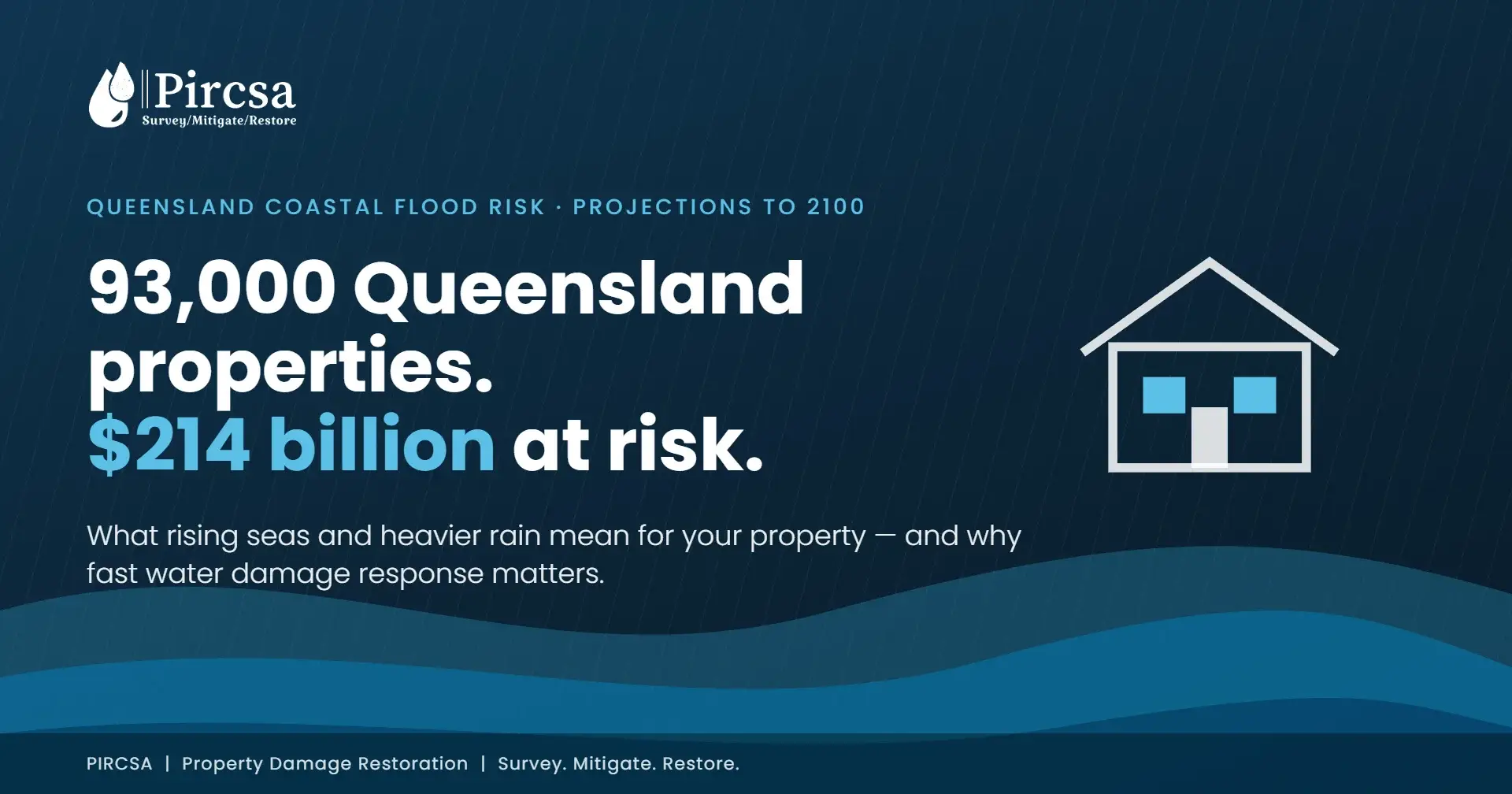
Queensland flood risk just got a very big number attached to it. New research reported by ABC News on 10 September 2026 estimates that more than 267,000 coastal properties across Australia are at risk of flood damage by 2100, with total costs of more than $850 billion — around $274 billion in property losses and $580 billion in land-use damage. Queensland is the most exposed state in the country, with 93,000 properties at risk and a projected damage bill of $214 billion.
For homeowners, landlords, strata committees and property managers across Brisbane, the Gold Coast and South East Queensland, those figures aren’t just a headline about the distant future. They’re a reminder that water is already the most common cause of property damage we see — and that how quickly it’s dealt with decides how much of a property can be saved.
What the New Queensland Flood Risk Research Found
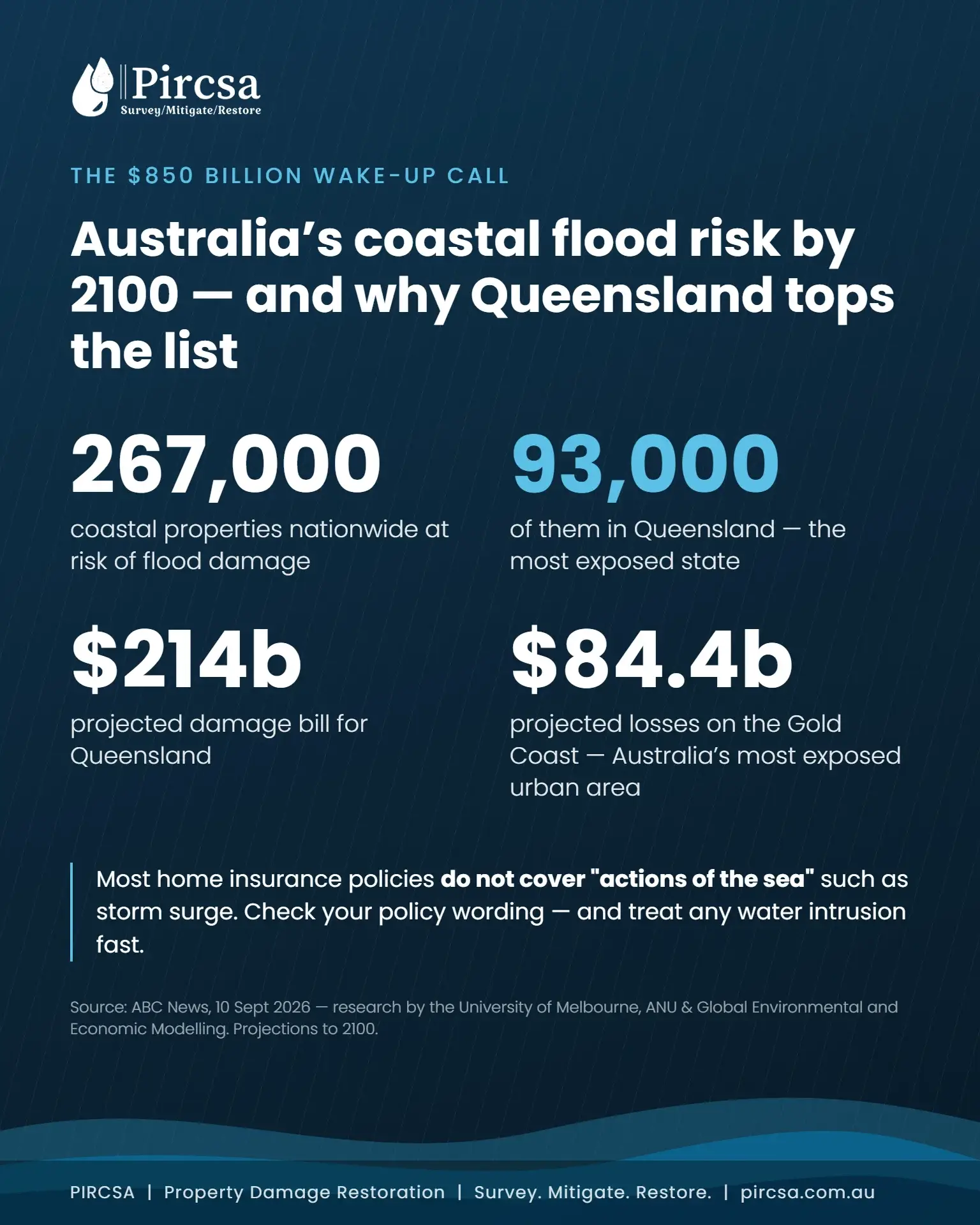
The modelling, by researchers from the University of Melbourne, the Australian National University and Global Environmental and Economic Modelling, looked at the cost of sea level rise under a 2.7°C warming scenario. The key numbers:
- 267,000+ coastal properties nationally at risk of flood damage by 2100.
- 93,000 of those properties are in Queensland, with an expected damage bill of $214 billion.
- The Gold Coast is the most exposed urban area in Australia, with an estimated $84.4 billion in projected economic losses.
- Sea levels have already risen more than 22cm since 1900, with around another 14cm projected by 2050.
As the researchers point out, higher seas also mean higher tides and higher king tides — so the water reaches further inland during storms, and drains and low-lying areas stay wet for longer.
The Insurance Gap: “Actions of the Sea”
One detail in the research deserves more attention than the headline figure. While most coastal properties carry some level of insurance, insurance generally does not cover “actions of the sea” — damage caused by storm surge, high tides or coastal erosion. The Queensland Government’s flood insurance guidance says the same thing: most policies don’t cover actions of the sea, and flood cover itself varies between insurers.
In practice, that means many property owners are carrying more of the water damage risk than they realise. It’s worth reading your Product Disclosure Statement, checking exactly how “flood”, “storm” and “actions of the sea” are defined, and confirming your sum insured still reflects current rebuilding costs. If you ever do need to claim, the way the damage is documented and dried matters too — we’ve covered that in the #1 mistake Queenslanders make in a water damage insurance claim.
Why Fast Water Damage Response Matters More Than Ever
As Queensland flood risk rises, it’s worth remembering that whether water comes from a storm surge, an overwhelmed stormwater system or a heavy rain event, the property that recovers best is the one where water is treated quickly — not left to sit. Within 24 to 48 hours, trapped moisture in wall cavities, subfloors and ceiling spaces starts creating the conditions mould needs to establish itself, and building materials begin to swell, delaminate and weaken.
That’s why our water damage restoration process always starts with a proper survey and calibrated moisture measurement, rather than guesswork. Knowing exactly how far moisture has travelled lets us target structural drying where it’s needed and verify that the building is actually dry — not just dry on the surface. Getting this right early is what prevents the follow-on costs of mould remediation, repeat callouts and disputed claims.
What Queensland Property Owners Can Do Now
You can’t control sea levels, but you can reduce how much damage water does when it arrives:
- Know your exposure. Check your local council’s flood mapping and understand whether your property is affected by coastal, river or overland flooding.
- Review your insurance. Confirm what your policy covers for flood, storm and actions of the sea, and keep photos of every room and copies of key documents stored off-site.
- Maintain drainage. Keep gutters, downpipes and stormwater drains clear so water moves away from the building. Our storm season checklist for Queensland properties walks through the essentials.
- Don’t ignore “small” water. A damp carpet edge, a stain on the ceiling or a musty smell can signal moisture that has travelled well beyond what you can see. Here are five red flags you shouldn’t ignore after water damage.
- Have a plan for the first 24 hours. Save a trusted restoration contact before you need one, and keep our urgent water damage checklist handy.
For Landlords, Strata and Property Managers
Rising Queensland flood risk multiplies across a portfolio. When several properties or units are affected at once, trades and insurers are stretched and delays compound. Clear maintenance records, before-and-after documentation and a single accountable restoration partner make a real difference. Our restoration project management service manages the whole recovery — from initial survey through drying, reinstatement and claim support — and we’ve shared more on water damage restoration for rental properties in Queensland.
Queensland Flood Risk: Common Questions
Does home insurance cover storm surge in Queensland?
Generally not. Most policies exclude “actions of the sea”, which includes storm surge and high tides. Flood and storm cover also varies between insurers, so check your policy wording and speak to your insurer if you’re unsure.
Is Queensland flood risk only a problem for beachfront homes?
No. Higher seas push king tides and storm water further inland, and heavy rain can overwhelm stormwater systems well away from the coast. Any property can take on water from roofs, gutters, drains or overland flow.
How quickly should water damage be treated?
As soon as possible. Mould can begin to establish within 24 to 48 hours, so getting moisture measured and drying started early is the best way to limit damage and cost.
Had Water Damage Recently? Get It Checked Properly
The research is a long-term projection, but the lesson applies today: the faster water intrusion is found and treated, the smaller the damage and the cost. If your home, rental or commercial property has taken on water recently — even a “small” amount — PIRCSA can survey the property, measure where the moisture has gone and give you an honest assessment of what’s needed.
Contact the PIRCSA team or call 07 3267 7068 to arrange a free assessment.
Source: “Sea level rise threatens more than a quarter of a million properties as bill surges to $855b”, ABC News, 10 September 2026. Figures are research projections to 2100 and are provided for general information only — check your own policy with your insurer.