

Moisture Measurement Queensland
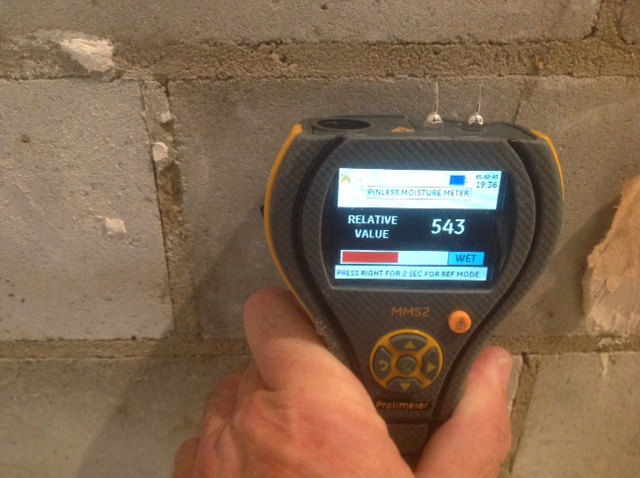
The term dry is relative; every structural material has an acceptable moisture content that prevents deterioration as a result of elevated ongoing moisture conditions. It is important that the attending restorer is fully conversant with each materials target benchmark moisture level, in order to prevent further damage from occurring as a result of inadequate drying being undertaken.
Should the main water feed pipe burst in your property, it will release approx. 9 litres of water per minute into the building, this equates to approx. 540 litres per hour. If this runs for 2 hours or more before it is stopped – there will be a minimum of 1080 litres of excess water which equates to a ton of water in weight that requires removal from the building.
Following a water loss event, water penetrates the structure, e.g. A concrete slab that is 150mm thick can hold, as much as 30 litres of excess water per square meter of material at full saturation. This means that a room which is 30 square meters in size, may contain as much as 900 litres of water which requires removal post-event.
Drying goals may be at, or above the dry standard and should be documented as they relate to specific materials. The restorer should establish drying goals that would be expected to:
A: inhibit microbial growth; and
B: return materials to an acceptable moisture level or moisture content.
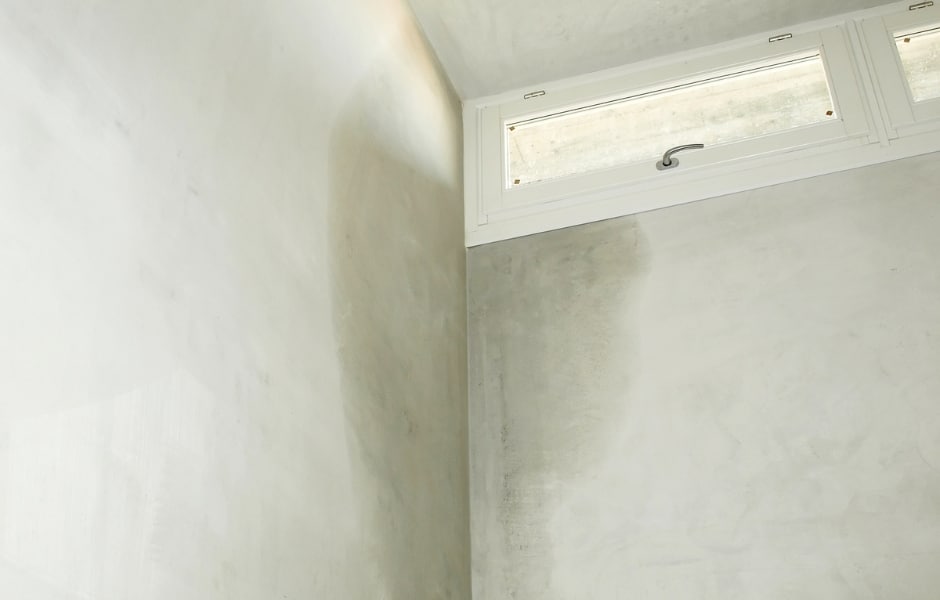
Using Australian and other global standards as a reference point, we know that concrete is at an acceptable condition enabling the laying of floor coverings when the slab reaches an in-depth condition of 80% equilibrium relative humidity.
How Do You Know When a Building Is Fully Dry?
Understanding these benchmarks is the foundation of professional moisture measurement Queensland property owners and insurers can rely on when assessing whether a water-damaged building is genuinely safe to reoccupy or repair. “Dry” isn’t a guess — it’s a measurable target checked against recognised material benchmarks, including:
- Concrete slabs: acceptable at 80% equilibrium relative humidity (ERH) before floor coverings can be safely installed
- Timber framing and flooring: moisture content returned to the range typical for the local climate, generally 10–14% depending on species
- Plasterboard and gyprock: readings consistent with surrounding unaffected material, confirming no residual saturation
- Masonry and brick: moisture readings stabilised through the depth of the material, not just at the surface
We use a combination of non-invasive moisture meters, penetrating pin meters, and thermal imaging to build a complete picture of where moisture remains — including inside wall cavities and under flooring where it isn’t visible. This multi-tool approach means drying decisions are based on actual material readings rather than surface appearance, reducing the risk of premature equipment removal and the secondary damage that can follow.
At Pircsa we use known standards and material manufacturer’s guidelines as references, we set target benchmarks based on those standards. This ensures that the structure is dry to acceptable conditions on completion of drying.
As a result, we can provide guarantees in the form of a certificate of drying on completion of our work. By using our services, you have complete peace of mind that when we carry out restorative drying, you can safely start repair works following the removal of the equipment.