A pre wet season mould check is the single most valuable thing a Queensland property owner can do in October.
October is the quiet month before Queensland’s official wet season begins on 1 November — and it’s also when humidity starts climbing, weeks before the first serious storm ever forms. That combination catches a lot of property owners off guard. Mould doesn’t wait for a dramatic weather event; it establishes itself in the weeks of rising humidity that come before the rain, quietly working into bathroom ceilings, wardrobe walls and subfloor spaces while everyone else is still focused on gutters and roof tiles.
At PIRCSA, October is consistently one of our busiest months for mould callouts — and in almost every case, the property owner had already tried to deal with it themselves before calling us.
Why DIY Mould Treatments Don’t Last
A spray bottle of bleach or a supermarket mould treatment will usually make a patch of mould disappear from view within a day. What it won’t do is address the moisture behind the surface that caused it in the first place. Mould is a symptom, not the problem — treat the visible patch without finding and fixing the moisture source, and it reliably returns within weeks, often larger than before.
This is the single most common mistake we see: a tenant or owner treats the same bathroom corner three or four times over a year, never realising the actual cause is a slow leak in the wall cavity or an extractor fan that hasn’t been venting outside for years.
What Queensland Property Owners Are Responsible For
Under Queensland’s residential tenancy laws, landlords have a general obligation to provide and maintain a rental property in a reasonable state of cleanliness and repair, which extends to addressing mould caused by building issues such as leaks, poor ventilation or water ingress — as distinct from mould caused by a tenant’s day-to-day living habits. The Residential Tenancies Authority’s guidance on mould sets out this split in more detail. For body corporates and strata schemes, common property water ingress carries similar obligations. Getting this distinction wrong, or leaving it undocumented, is a frequent source of disputes between owners, tenants and insurers. (This is general information, not legal advice — if you’re navigating an active dispute, a property lawyer or your managing agent can advise on your specific obligations.)
The PIRCSA Difference: Survey, Mitigate, Restore
Every mould remediation job we take on starts the same way every other restoration job does at PIRCSA: with a proper survey, not a guess. Using calibrated moisture measurement equipment, we map exactly where moisture is sitting inside walls, flooring and ceiling cavities — often well beyond the visible mould patch — before any treatment begins. That’s the difference between mould that’s actually gone and mould that’s been painted over.
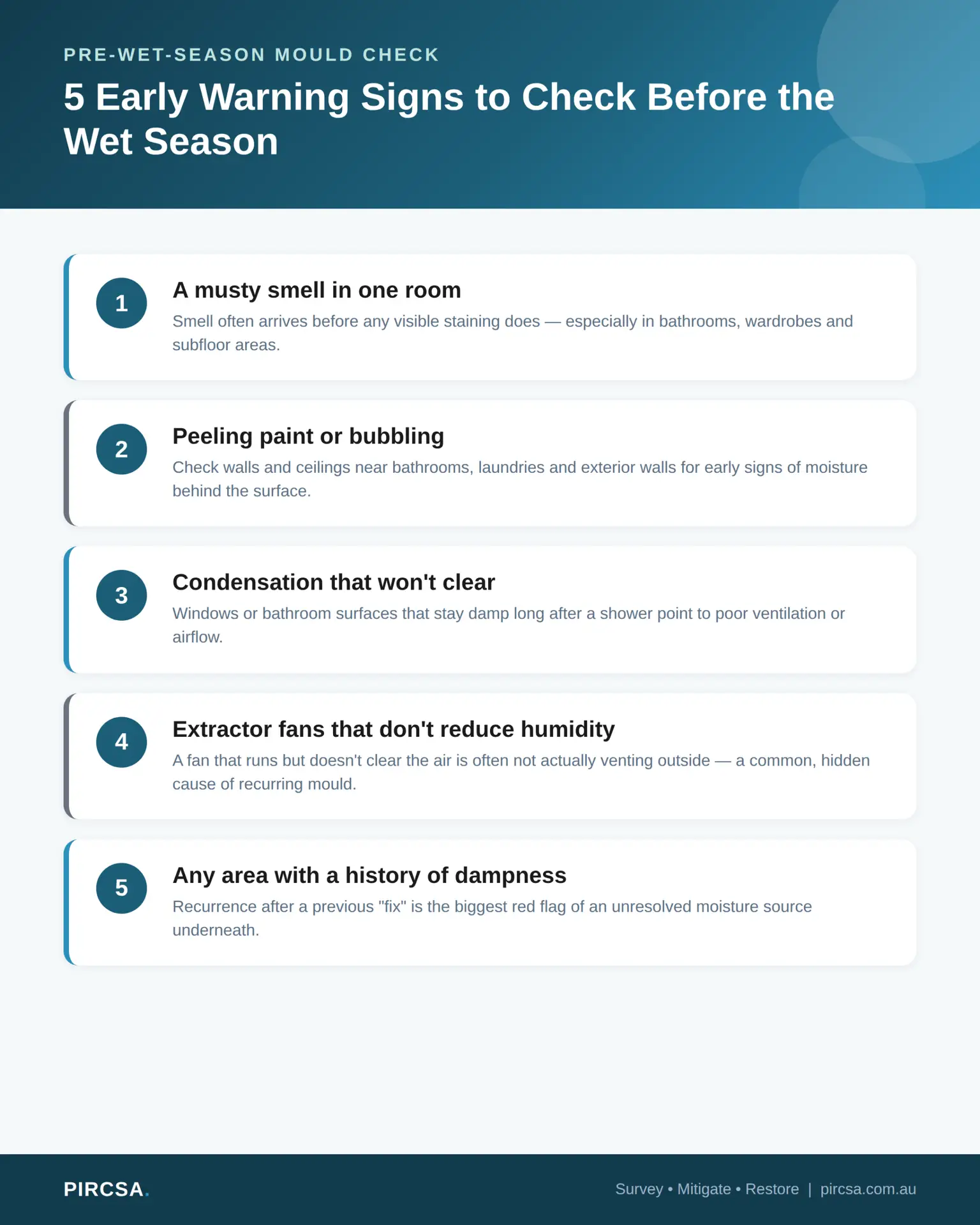
5 Early Warning Signs to Check Before the Wet Season
Walk your property (or ask your property manager to) and look for:
- A musty smell in any one room that’s stronger than the rest of the house. Smell often arrives before any visible staining does.
- Peeling paint or bubbling on a wall or ceiling, especially near bathrooms, laundries or exterior walls.
- Condensation that doesn’t clear on windows or in a bathroom long after a shower has finished.
- Extractor fans that run but don’t seem to reduce humidity — a common sign they’re not actually venting outside.
- Any area with a history of dampness, even if it was “fixed” previously. Recurrence is the biggest red flag of an unresolved moisture source.
If any of these sound familiar, it’s worth a professional moisture check now, while it’s a preventative job rather than a remediation job.
How Long Does a Pre-Season Moisture Check Take?
Most preventative moisture assessments take one to two hours, depending on the size of the property and how many problem areas need checking. A PIRCSA technician walks through with calibrated moisture meters, checking common trouble spots — bathrooms, laundries, exterior-facing walls and any area with a known history of dampness — and provides a written report with photos and moisture readings. If an issue is found, you’ll have documented evidence and a clear scope of works before it becomes a larger problem, which is also useful if an insurance claim becomes necessary down the track. There’s no obligation to book remediation work off the back of an assessment; many property owners use it simply for peace of mind heading into the wetter months.
Is Mould Damage Covered by Insurance?
This is one of the most common questions we’re asked, and the honest answer is: it depends on the cause, and every policy is different. Mould resulting from a sudden, identifiable event — a burst pipe or storm damage, for example — is often covered, provided it’s treated promptly. Mould attributed to gradual deterioration, poor maintenance or long-term dampness is frequently excluded. This is exactly why the documentation we discussed in our storm season checklist article matters: dated photos, a moisture assessment report and a clear timeline can be the difference between a claim that’s accepted and one that isn’t. We’re not insurance advisors, so always confirm your specific coverage with your insurer or broker — but a professional assessment report from the outset gives you the best possible starting point either way.
Your Pre Wet Season Mould Check: Get Ahead of It
October gives Queensland property owners a genuine head start most people don’t use. A pre-season moisture check costs a fraction of a full remediation job, and it catches problems while they’re still small, contained and cheap to fix. Whether you manage a single rental, a strata scheme or a portfolio of properties, now is the window to get ahead of it.
Explore our mould remediation and moisture measurement services, or get in touch with our team for a pre-wet-season property assessment.
Mould that’s gone for good beats mould that’s just out of sight — every time.